
Guides · Duty of care
Do I legally need a commercial waste contract?
UK law does not require a contract by name. It requires that waste from your business is transferred to an authorised person, described accurately, documented on a Waste Transfer Note, and that the records are kept for two years. A regular arrangement with a registered carrier is the standard way to satisfy that continuously.
Talk to us about a collectionWhat does the law actually require of a business?
The waste duty of care sits in section 34 of the Environmental Protection Act 1990 and applies to every business in England, with no small-business exemption and no minimum-volume threshold. A one-chair barbershop carries the same duty as a 45-desk office.
- Store it safelySo it cannot escape, blow away or attract fly-tipping.
- Transfer it to an authorised personA registered waste carrier or a licensed site.
- Describe it accuratelyThat is what the Waste Transfer Note is for.
- Keep the paperwork two yearsAnd produce it if the council or the Environment Agency asks.
The government's Waste Duty of Care Code of Practice is the document enforcement officers work from.
Does a small business need a commercial waste contract?
Yes, in the sense that the duty of care applies whatever the volume. There is no threshold below which business waste becomes household waste, including for a business run from home.
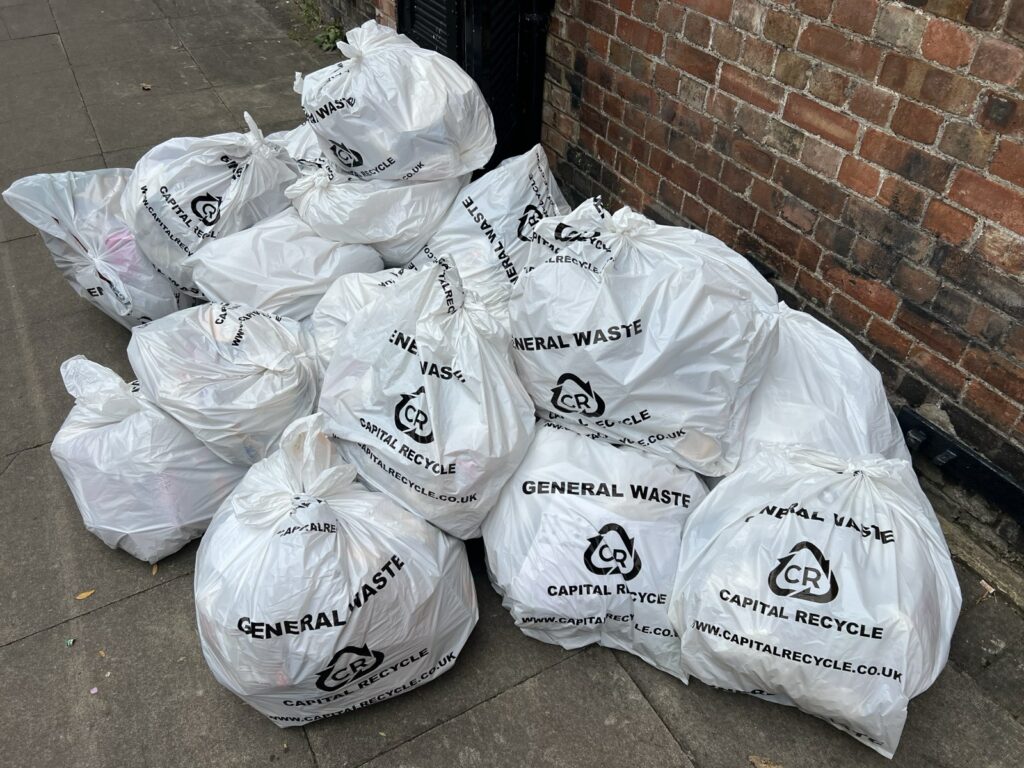
The traps are ordinary: coffee grounds from a six-table café, flattened cardboard from a market stall left beside a household bin, offcuts from a home-based framer, the Friday office bag someone takes home because it is just one bag. Household bins are for household waste. Council enforcement letters usually open with a photograph of bags at the kerb.
What happens if a business has no waste contract?
Councils issue fixed penalty notices for duty-of-care failures, and prosecution at the serious end carries unlimited fines. The more common cost is quieter: an officer asks for two years of waste documentation and a business with none spends weeks retro-fitting compliance instead of trading.
The two-year record point is the one to remember. The question is not whether you paid someone once. It is whether you can show the trail.
Separation is a legal duty in its own right, on top of the duty of care. Full detail: what the new recycling rules mean for your business.
What do you need to stay compliant?
Three things keep a business covered: a registered waste carrier, a Waste Transfer Note for every transfer, and two years of retained records.
- A registered carrierAnyone taking commercial waste needs an Environment Agency registration. Capital Recycle is registered under CBDU466346 and you can check it, and anyone else, on the public register.
- A transfer noteFor regular collections an annual note covers the year's repeating collections in one document. Capital Recycle runs that as a £65 + VAT yearly service, issued and held on file.
- Two years of recordsIf your collector holds copies as standard, this looks after itself.
A written contract is not on that list. You could in principle meet the duty with documented ad-hoc collections. A regular arrangement is simply how the documentation stays continuous without anyone having to think about it, which is what a council letter means even though the statute never uses the word.
What should you look for in a commercial waste contract?
Six things, in writing, before you sign with anyone:
- The term and the notice period.Twelve months is the standard for a recurring collection. Know the date it renews.
- What the price includes.Fuel, ULEZ, the Congestion Charge, disposal and the transfer note should all be inside the number, not bolted on.
- The weight allowance on each lift, in kilos.Every per-lift price carries one. Ask for it by bin size.
- How and when the price can change.A price-review clause with no trigger is a blank cheque.
- Who owns the bin.Rental is a line some operators add every month. Capital Recycle does not charge it.
- Who keeps your paperwork.Your collector should hold the transfer note copies for the two years the law requires.
What does a minimum compliant setup look like?
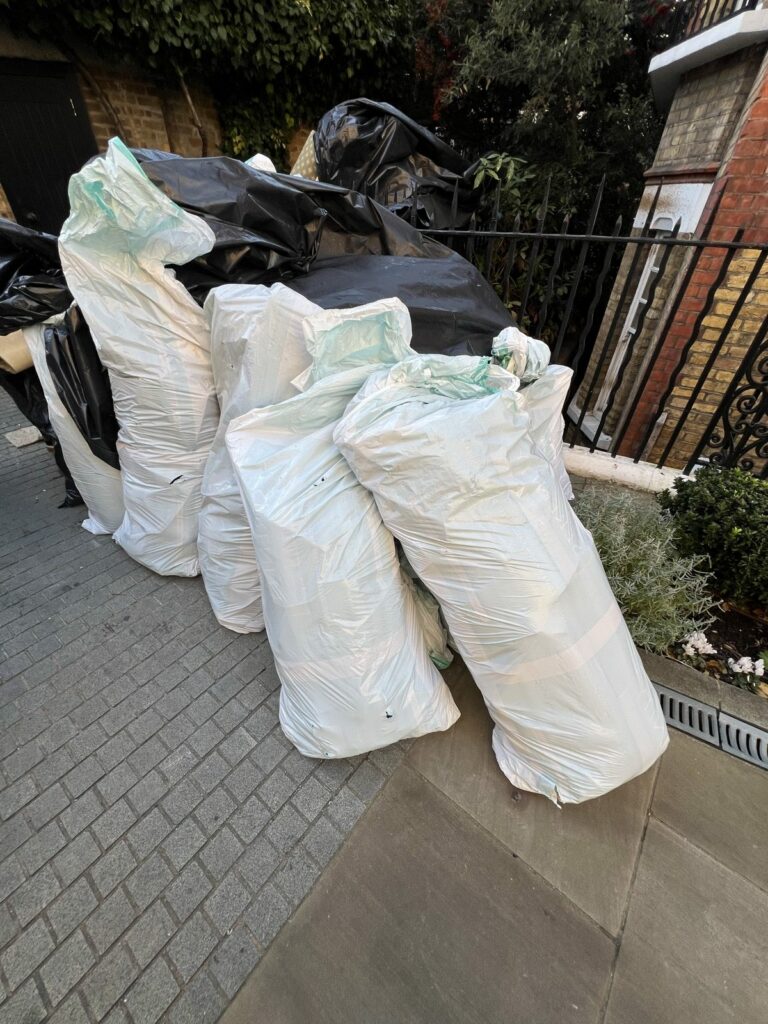
For a small premises it is modest: pre-paid collection sacks from £2.20 + VAT under 10 bags a week, stepping down to £1.50 + VAT at volume, collected on a schedule that matches your volume, with the transfer note service on file.
No bin is needed if there is nowhere to put one. Collections typically start within 24 to 48 hours, so the gap closes the same week the letter arrived. Larger premises with bin stores go per lift instead.
See pricingThe paperwork half is the part businesses most often miss. Full detail: what is a waste transfer note and do I need one?
For what that setup actually costs, see how much commercial waste collection costs in London.
Letter from the council?
Tell us the premises, the postcode and roughly what you throw out. Call 0207 101 4003 or use the contact form.
Contact us